
GastroEsophageal Intussusception (GEI): the Unexpected Killer
“In less than 48 hours we lost our beloved girl…” Danyelle about Harlow
“I told her I always feared GEI, I asked for an x-ray… vet returned, Oh my God, you were right…I began to cry…” Janice about Ryder
“I knew something was wrong though. Something just felt wrong. She had never thrown up blood before…” Shari about Heart
What is Gastroesophageal Intussusception (GEI)?
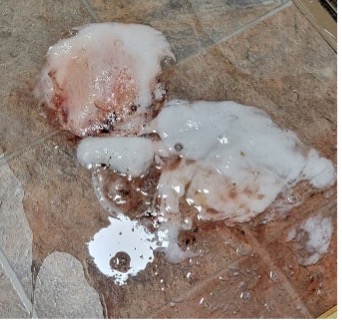
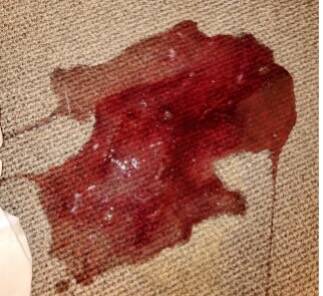
This is a very unfortunate complication of megaesophagus whereas the stomach and sometimes other organs like the spleen and liver telescopes into the esophagus. It usually occurs after repeat vomiting or regurgitation. The dog may present with large amounts of mucus vomit/regurgitation along with streaks of blood. Later they may vomit/regurgitate large volumes of blood.
The dog may present with lethargy or restlessness, an absence of appetite, abdominal pain, and a general look of feeling unwell. It can be confused with a more common infection with megaesophagus, aspiration pneumonia, or the blood in the vomit may suggest esophagitis or a stomach ulcer. Anytime you see blood in regurgitation/vomit it is reason for alarm. Your vet should perform x-rays of the esophagus and stomach to be sure that the organs are in place.
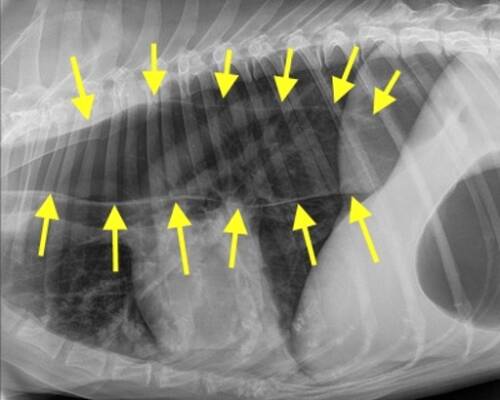
Megaesophagus

Gastroesophageal Intussusception
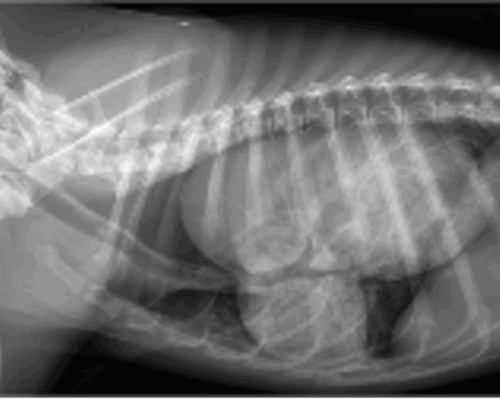
Complete herniated stomach and spleen
In early 2019, we began to notice an increase of GEI posts from our members in our Facebook Group, Upright Canine Brigade Megaesophagus Awareness and Support Group. In order not to miss any suspected posts, we set an alert among our Administrators and Moderators called “Blood”. This way we could quickly pick up on the post and comment about the dangers of GEI. We were so concerned we posted a survey within the group about megaesophagus and GEI thinking we might pick up a pattern.
The dogs that were affected by GEI seemed to have one thing in common, severe megaesophagus. Other than that, it does not seem to be breed or age connected, nor does it seem to have anything to do with how they were managed or medication they were given. Most (23 out of 26) were diagnosed with (CIM) congenital idiopathic megaesophagus. Two dogs were diagnosed as Idiopathic ME and one was diagnosed as Acquired ME. Surgery was successful in 13 of the dogs with GEI. Only one reported that their dog died during or shortly after surgery. 12 dogs did not receive surgery and were euthanized. We had 512 responses to this ME/GEI survey.
The most important thing we would like to emphasis is that time is of the essence. If you suspect that your dog is having symptoms of GEI contact your veterinary clinic/hospital right away. Explain what you are seeing. They may divert you to a different clinic that has diagnostic tools that they may not have. They may not have a surgeon available to perform the surgery. It is wise to have this conversation now with your veterinary team rather than waiting until a crisis occurs. Luckily, GEI is a rare complication but it is always best to be prepared.
One way to possibly prevent GEI is to have a gastropexy performed perhaps when your dog is under anesthesia for a spay/neuter procedure. If your dog does end up having GEI surgery the surgeon will tack the stomach to the abdominal wall at that time.
Some of Our Members’ GEI Stories
“Ryder” GSD, 6.5 years old

Ryder was born April 24, 2016 with congenital Megaesophagus. He was ten weeks old when I brought him home, but it took two years to finally get a diagnosis. For another four years we managed his condition using a home-made Bailey Chair, giving him a slurry made from soaking and blending his kibble twice daily.
Like most cases, he had his ups and downs. He only regurgitated roughly two to five times a month. His biggest problem was vomiting and that was usually caused from eating wild life droppings, deer poop mostly. On occasion he would get sick and lose his appetite. I could always tell he wasn’t feeling well because he would sleep a lot and show no interest in his favorite ball. Usually he would bounce back after some chicken and rice remedies and a couple days of rest.
On November 21, 2022 we decided to take him to our vet because he didn’t seem to be recovering as quickly from what we thought was another episode. After some blood tests our vet determined he had some sort of internal infection and his white blood cell count was elevated. We gave him antibiotics and he began eating again. A week had passed and he seemed to be doing better, although eating became a chore because he knew I was mixing his meds into his food and wasn’t liking it.
December 3, 2022, I loaded him and his sister, Morgan into the car and drove an hour to my grandmothers to visit. He played in the snow and ran around with his sister and appeared to be his normal self again. But on the way home he vomited in the back of the car. I offered him some chicken when we got home and he turned his nose up at it. He vomited again around 6 pm, this time it had dark coloring in it which I suspected might be blood. I felt so terrible and wondered if this was sudden or did he feel awful all day and didn’t let on? He vomited two more times, lots of foam and more pinkish red blood. It was after 7 pm so I drove him to the nearest Emergency Clinic. They were aware of megaesophagus, but didn’t know much about it. The vet wanted to run blood tests and she suspected a stomach ulcer. I told her he recently had blood tests and told her I always feared GEI so I requested she do an X-ray. As I waited, Ryder vomited three more times in the exam room. I just laid on the floor with him hugging him and telling him it was ok. When the vet returned her face was nearly white. She said, “Oh my God, you were right”. I began to cry. She showed me his X-ray and explained that his stomach had pulled up into his esophagus. She began to explain that they “couldn’t do that type of surgery “. The only place they knew that could was the vet clinic at Washington State University. They called and spoke to the surgeon there and they explained they could do the surgery, but there were no guarantees and we were looking at costs from between $5000-$10,000. I was trembling so hard my whole body was shaking. My baby was going to die. WSU was two hours away. I felt guilty for thinking it, but the thought of $10,000 for surgery scared me. Even if he pulled through, he would still suffer all the complications and hardships of ME. We couldn’t take him home, because he was at risk of hemorrhaging. I had to make the decision right there to say goodbye.
I hugged him and cried and told him how much I loved him. I always told him he was a good boy and did a good job. I called my boyfriend and he brought Ryder’s sister down so we could all be with him. I laid on that floor with him nearly two hours and when they arrived, he got up and wagged his tail. It absolutely broke my heart. I was completely shattered. My biggest regret is not holding it together for him. I cried the whole time and his sister was whimpering. When they said he was gone I broke down and sobbed uncontrollably. It all happened so fast. He walked in that ER as if he was fine and never walked out again. It was the most heartbreaking, terrifying nightmare of my life.
I would do it all over again. All the struggles, all the fear, the commitment, it was all worth every single day that beautiful, loving boy was in my life.
Rest in Peace Dear Ryder – Mom, Janice
“Honey” Cane Corso, 5 years old
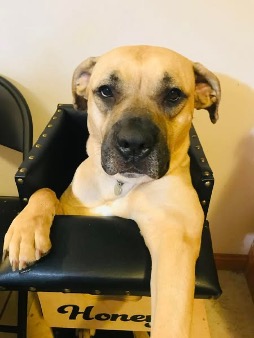
When I first met Honey, she was in a rough spot. She’d already been returned to the shelter twice and had just been diagnosed with a condition I knew little about—Megaesophagus (ME). All I really knew was that despite the shelter team trying everything—diet changes, management techniques—Honey was still declining. She wasn’t just underweight; she was wasting away in front of us. The stress of the shelter was too much.
At just 60 lbs., Honey was a shadow of the dog she could be. Everyone told me to give up, that she wasn’t going to make it. But something in her eyes said otherwise, so I took her home “just to foster.”
I’ll be honest—it was tough at first. Her condition meant she couldn’t eat like a normal dog. We had to get creative, consistent, and really patient. But little by little, things started to change. Her regurgitation lessened. She began gaining weight. Supplements helped. She got stronger. By the time she hit a healthy, vibrant 80 lbs, I knew this was no longer a foster situation—Honey had found her forever home. I adopted her and made her an official part of the Kopec pack.
But our happy ending almost unraveled just six months later.
One day, Honey vomited blood—small piles, but enough to terrify me. I called our vet, who agreed we needed to see her right away. X-rays revealed something alarming: her stomach had telescoped into her esophagus, a rare and life-threatening condition called Gastroesophageal Intussusception (GEI). My vet had never seen anything like it.
She was rushed into surgery. I was told the odds were 50/50. It was the longest three hours of my life.
Finally, the call came. Honey had made it through. The surgery had been complex—her stomach had completely folded into her esophagus, pulling other organs along with it—but thanks to the incredible team at Westpark Animal Hospital and our amazing vet, Dr. Nicole Planter, they were able to save her life.
Three days later, Honey came home.
Recovery wasn’t easy. We had a few setbacks—several bouts of aspiration pneumonia scared us and set us back. But with each one, we learned more about her needs. We fine-tuned her care, adjusted her routine, and stayed determined. She fought through every single challenge with the same quiet strength that made me fall in love with her in the first place.
Now, almost five years later, Honey is thriving. She’s over 11 years old and still the heart of our home. Her journey has been anything but easy, but she’s taught me more about resilience, trust, and second chances than I ever thought possible.
So, if you’re thinking about fostering—or adopting—a shelter dog, do it. Give them a shot. Sometimes the ones everyone else gave up on are the ones who’ll surprise you the most.
“Eva” GSD, 8 years old
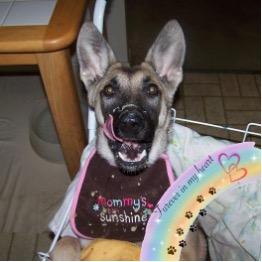
It seemingly came just out of the blue one morning. Her regular vet didn’t really know what to make of the X-ray except that something might be stuck and not passing through her stomach. She told me to take her home and sit her in her chair for a while to see if it would pass. Later that day she threw up more blood. Took her to the emergency room and they didn’t know what to make of the X-ray either so they sent it off to a certified radiologist. It came back as GEI. I had gone home and left her at the ER on IVs etc. And about 1:00 in the morning, they called me and told me to get over there because she was throwing up blood. By then she was not stable enough to survive the surgery. And I truly don’t even think the vet knew how to do that surgery! We kept her on IVs, pain meds, etc.… for a few hours but I could see that she was getting tired. I just couldn’t bring myself to say those final words to Let Her Go. But I saw how tired she was and I gave the go ahead. June 16th was when she passed away. It was Father’s Day. 3:00 in the morning.
I have a special ceremony that I do here at home when they pass over. I wanted her to be home but it wasn’t possible. So, I brought in all of my Rainbow Bridge ceremonial stuff to the vet. A special comforter, crystals and a taping of Over the Rainbow by the Hawaiian artist Iz. Beautiful rendition of the song. I played it as she was passing over. And I was doing Reiki on her as she passed over. I could feel when her spirit left her body. We stayed with her for about an hour afterwards because I sense that her spirit was still in the room. – Mom, Susan
“Maverick” Labrador, 11 months old
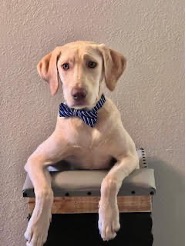
We picked out Maverick, our yellow (Dudley) Lab, to become a service dog for my wife. We brought him home at 8 weeks old, full of hope and excitement. But almost immediately, we noticed something was off—he was extremely bloated and made a “sloshing” sound when we picked him up. When we fed him, he began regurgitating his food. At the time, we thought he was vomiting, but we later learned it was actually regurgitation—a sign of something more serious. He also had a slight cough and some yellow-green nasal discharge.
Our regular vet was out of town, so Maverick saw a fill-in who attributed his symptoms to a vaccine reaction and sent us home. The next day, the regurgitation worsened, and soon he couldn’t keep anything down. We insisted on an X-ray, which revealed devastating news: Maverick had congenital idiopathic megaesophagus (ME) and aspiration pneumonia (AP). The vet admitted he had no experience with this rare condition.
We immediately turned to the University of Florida (UF), where Maverick was hospitalized. Their team confirmed the diagnosis and began managing the pneumonia. We were told his ME was severe, incurable, and not something he would outgrow—but with the right care, it could be managed.
Since then, Maverick has had quite a journey. Despite constant supervision, he once managed to swallow a raisin dropped at a family function, leading to an overnight ICU stay. Another time, while in his puppy pen, he somehow reached an unplugged extension cord tucked along the wall. He later threw up a ball of wire, resulting in another emergency visit. Let’s just say the internal medicine and ER teams at UF know Maverick well now. He’s a familiar face—known affectionately as “wiggle butt” for his ever-happy demeanor.
Thanks to countless adjustments to his food, medications, and close monitoring, Maverick’s ME is now considered well-managed. His internal medicine vet has been amazing, supporting us through every challenge.
But in February, at 11 months old, Maverick faced his biggest battle yet.
While accompanying my wife to her therapy session, Maverick suddenly became very restless—uncharacteristically refusing to settle, even while “working.” Around 1:30 PM, she took him outside, where he began retching, something that rarely happens with ME dogs. Eventually, he vomited a thick, mucous substance that she had to pull from his mouth. The episode lasted 15 minutes. She immediately knew something was seriously wrong and rushed him to UF, a 45-minute drive away. On the way, Maverick cried out in distress, vomited several times, and couldn’t sit or lay down. When they arrived, he began vomiting blood.
The ER team acted quickly. His labs looked surprisingly good considering what his X-rays revealed: his stomach had telescoped into his esophagus—a rare and life-threatening condition called gastroesophageal intussusception (GEI). The intern explained that while surgery was an option, outcomes were uncertain due to the rarity of the condition.
My wife called me at work (just across the street) in tears, urging me to come immediately. She had already contacted our internal medicine vet and requested the on-call surgeon. Both specialists agreed—if Maverick were their dog, they would proceed with surgery.
I arrived a little after 7 PM and got a brief but emotional visit with Maverick. He looked so weak and pitiful in the kennel, but he still wagged his tail when he saw me. We knew we had to try. As a service dog, Maverick has played a huge role in helping my wife manage her PTSD. We couldn’t give up on him. And thanks to the quick action and how stable his labs were, the doctors believed he had a strong fighting chance.
One of UF’s surgeons—who had performed this exact surgery successfully twice before—came in on her day off. The surgery involved three surgeons working together for 30 minutes to gently pull Maverick’s stomach out of his esophagus. Thankfully, there was no necrosis, though a small section of the stomach was discolored due to restricted blood flow. That area quickly began returning to a healthy pink once blood supply was restored. They performed a gastropexy, attaching both sides of his stomach to the abdominal wall—one side to prevent GEI from recurring, and the other to prevent Gastric Dilatation and Volvulus (GDV), or bloat, which is common in deep-chested breeds.
Maverick remained in ICU for a couple of days, heavily sedated and on IV fluids. He was transitioned to Hill’s i/d Low Fat Digestive Care diet to help prevent pancreatitis. This diet, combined with the surgery, proved to be incredibly beneficial. We’ve since modified it slightly to add a bit more fat and are thrilled with how well he’s doing.
Today, Maverick is happy, thriving, and continues to be an amazing support animal and member of our family. We are forever grateful to the dedicated team at UF—especially our internal med vet, who went above and beyond, checking in constantly and sending updates.
In conclusion, we can’t stress enough the importance of being in tune with your dog, trusting your gut, and acting fast. These special pups need us to advocate for them. We were lucky to have access to such an exceptional veterinary team and the financial means to cover Maverick’s care. We recommend setting aside funds for emergencies—you never know when you’ll need them. It was absolutely worth every penny. We’d do it all again in a heartbeat for Maverick, our beloved, wiggly boy.
“Harlow” Dachshund, 2 years old
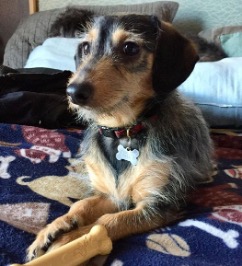
Harlow was born with Congenital Idiopathic Megaesophagus. Harlow, her mother and all her litter mates were rescued from a hoarding situation in California and flown to a rescue I volunteer for here in Montana. Thankfully her mother and all of her siblings did not have ME. I had first pick of the litter and chose Harlow, so as brief as our time was together it was always meant to be.
Our vet helped us connect with Washington State University, where Harlow was able to take part in their clinical study. This helped us learn the ins and outs of what to look for and how to give our girl the best chance possible. Despite the severity of her ME, we were able to manage her condition quite well. We had minimal regurgitation and never had a case of Aspiration Pneumonia.
One night Harlow woke us up with coughing, panting and a distended stomach. We were worried that this was perhaps our first bout of AP and drove her to the emergency vet in the middle of the night. The doctor took an X-ray and told us her esophagus had become so extended it was pressing on her organs. They gave us an antibiotic and we took her home and waited for Harlow’s regular vet clinic to open.
Harlow became lethargic and refused to eat or drink. Our vet contacted WSU and both parties recommended bumping up her Sildenafil dosage and have her not eat for the day to try to “reset” everything, hoping the symptoms would pass. Within just a few hours her condition deteriorated significantly. Harlow began vomiting large amounts of blood and was too weak to walk or even lift her head. I contacted our vet after hours and he had us come into the clinic immediately. He assessed the situation and found that it was beyond help. Most of her organs were being pulled into her esophagus.
We were willing to drive the 10 hours straight to WSU for emergency surgery but our vet explained her poor little body was so anemic, weak and becoming increasingly painful that she wouldn’t make the trip and there wouldn’t be a surgery that could fix the situation. We were left with no choice, but the absolute agony of letting her go before her pain became unbearable. In less than 48 hours we lost our beloved girl. I pray that someday more will be know about GEI so others won’t have to experience what we went through.
I urge you to never take a special day, a silly moment or a good laugh for granted. My world is a much colder place without her blanket tunnels, her shoe nibbling and her endless supply of kisses.
If you have the opportunity to love a special needs animal the bond you build is unlike anything I’ve never come across in life, it is so so worth it. I’ve had several friends, family members and complete strangers be so inspired by Harlow’s life that they are now completely open to the idea of adopting special needs and senior animals. We were able to teach people that life is not measured in years, it’s measured in hearts you change, love you give and memories you make.
– Mom, Danyelle
“Heart” Mixed Breed, 2 years old
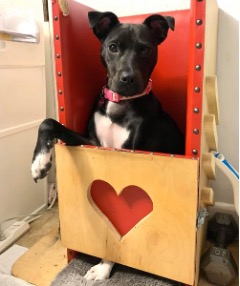
Heart came into my life as a puppy in 2018. When I brought her home at 4 months old she weighed just 15.74 pounds, all of her littermates were already over 30 pounds. She was diagnosed with congenital idiopathic megaesophagus (ME), a condition that made eating and drinking a daily challenge. But with careful management and a lot of love, Heart began to thrive. Within a year, she grew to 36 pounds—a true testament to her strength and spirit.
But on January 16, 2020, a seemingly normal Thursday morning, everything changed. She was regurgitating blood, something she had never done before. I took her to the emergency vet and they discharged her with fluids and an anti-nausea shot. But a few hours later, my gut told me something still wasn’t right. I brought her back and pushed for X-rays.
That’s when I got the devastating news. Her stomach had telescoped into her esophagus—a condition called gastroesophageal intussusception (GEI), which can happen in severe ME cases. Because the body’s organs are connected by fibrous tissue, other organs had also been pulled out of place. She was in pain. She couldn’t eat or drink. Surgery was an option, but it would have been incredibly hard on her, with no real guarantees. Even if she survived the surgery, she would still have ME, still face aspiration pneumonia, and still be in and out of the vet for the rest of her life. And Heart hated the vet—she hated being restrained, getting shots, X-rays, everything.
After talking with other ME dog parents, Heart’s regular vet, my friends, and family, I knew what I had to do. Racing around for scans and surgery while she was suffering would have been for me—not for her. I chose to let her go before things got worse. I didn’t want to make that decision. No one ever does. The vet never even suggested humane euthanasia as an option, which I found strange given how serious the situation was. But when Heart passed, blood poured from her nose and mouth. She let me know it was the right choice. I think she’d been holding on for me.
I cried for what felt like an eternity. I would look over at her corner of the room, and it all came rushing back. I just wanted my adorable, “broken” puppy back. I know we all love our animals, but when you care for a dog with ME—doing all those little things every day—it becomes something more. A kind of codependency. She took a piece of me with her that night, and I’ll never get it back.
Heart’s story is just one among many—and that’s why we need more research into ME and GEI. Too many animals are lost to conditions we don’t fully understand yet. We need better answers, better treatments, and ultimately, a cure. I’m forever grateful to Donna and Bob for everything they do through the Upright Canine Brigade and their 501(c)(3), The UCB Buffy Project. Their dedication, knowledge, and compassion have been a lifeline—not just to me, but to so many ME families. Their work brings hope, and that hope is everything.
—Shari, Heart’s Momma
“Harlow” Mixed Breed, 4 years old
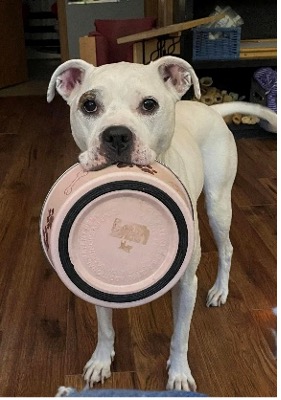
We welcomed Harlow into our family when she was about six months old. A coworker had rescued her from a difficult situation, and we just happened to be searching for a new furry family member. From day one, she was the perfect fit.
At first, we thought she was getting sick because she ate her food too quickly. However, we soon discovered she had megaesophagus (ME). To help manage her condition, we elevated her food and water dishes, which provided some relief, but she still experienced episodes. Initially, we believed she had a relatively mild case, but it didn’t take long for us to become experts at recognizing the signs of aspirated pneumonia (AP). She required treatment for AP a couple of times a year.
During the summer when she was four, we noticed something was wrong. She was restless, unable to get comfortable, and refused to eat. Assuming it was another bout of AP, we scheduled a vet appointment. But when she became lethargic and didn’t move for 12 hours, we grew seriously concerned. My husband had to carry her to the car—something highly unusual for Harlow, who always loved car rides, even when she wasn’t feeling well.
Her regular vet performed X-rays and diagnosed gastroesophageal intussusception (GEI)—a condition we had never heard of. At first, we didn’t realize how severe it was. The vet referred us to a veterinary specialty center, where multiple specialists were equipped to handle complex cases like Harlow’s. When we arrived, they were ready for us. They quickly confirmed the GEI and revealed that not only her stomach but also her spleen had shifted into her esophagus.
Emergency surgery was the only option, and the cost was estimated at around $10,000. Thankfully, we were in a position to move forward with the procedure. During surgery, the team removed her spleen and tacked her stomach into place to prevent the issue from recurring. It was an incredibly long night as we anxiously awaited updates.
Harlow pulled through beautifully and made an amazing recovery. The specialist suspected that, ironically, the severity of her ME may have actually worked in her favor—since it didn’t constrict her stomach and spleen too much, her stomach remained in relatively good shape. She spent about five days in the hospital before coming home, quickly becoming a favorite patient among the staff. We visited her every day.
Once home, she was introduced to her brand-new Bailey chair, which helped with her feeding and overall well-being. Despite everything she had been through, Harlow thrived. She lived another 5 ½ years, bringing immeasurable joy to our lives.
I know we probably should have lost her to GEI, but I am forever grateful for every extra day we got to spend with her.